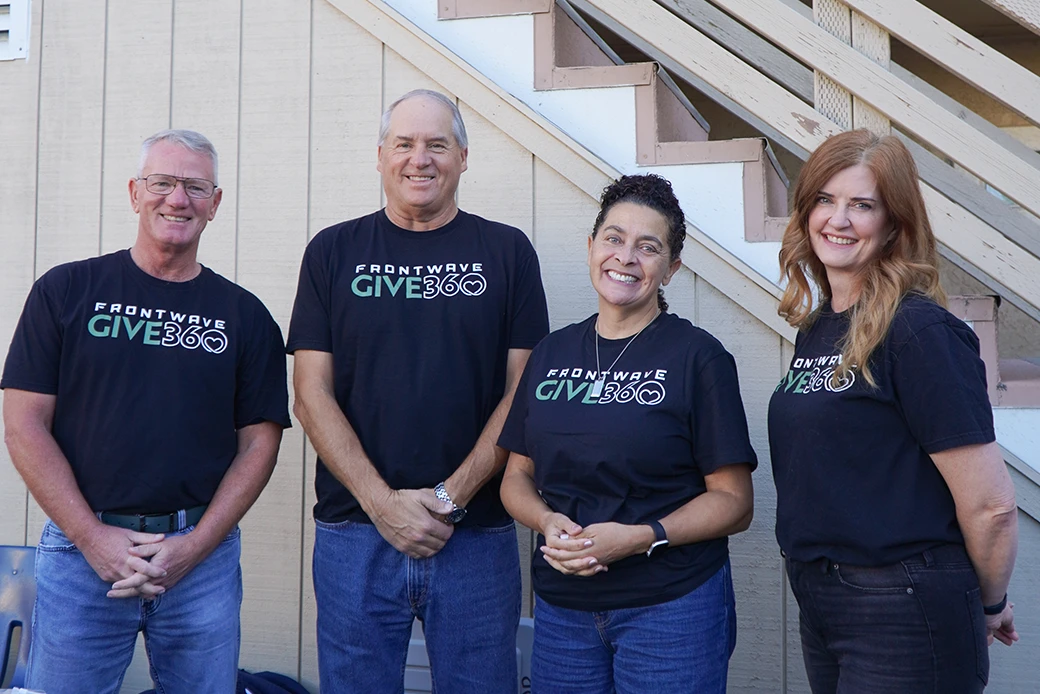
Showing Up for Our Communities
Through Frontwave Give360, we support local organizations and causes that strengthen the communities we call home.
Through Frontwave Give360, we support local organizations and causes that strengthen the communities we call home.
Use the value you've built to renovate, consolidate, or fund what's next.
Lending options tailored for hardworking business owners like you.
Insights on money, life, and the communities we serve.
Turning compassion into action through grants, scholarships, and support for local nonprofits.

April is Financial Literacy Month. You might have seen it pop up in emails, social posts, or on the news. But what is it all about? Simple. It’s a reminder to take control of something that affects nearly every part of your life. Your money.
Money touches everything, either directly or indirectly. Stress, goals, family decisions, day-to-day life. Yet most of us were never actually taught how to handle it. Out of sight, out of mind.
So this month isn’t about being perfect. It’s about being aware and making small changes that can have a lasting impact.
It sounds intimidating, but it isn’t about being a money expert or having wealth. Financial literacy simply means having a better understanding of your money so you can make more informed decisions. We’re not talking about perfect ones, just better ones.
Things like:
That’s it. No finance degree required, but it does need awareness and action.
Here’s the startling part of it. Less than half of U.S. adults are considered financially literate, based on research from the Global Financial Literacy Excellence Center.
Let that sink in. That’s about 130 million people making real financial decisions without fully understanding things like interest, inflation, or risk. Not because they’re careless. Because no one really showed them.
But that’s just the tip of the iceberg. Think about the next generation. If families don’t really have a handle on money today, what are their kids learning? Or worse, they’re picking up the same habits.
Here’s the good news. This is something we can change.
This isn’t just “good to know” stuff. It shows up everywhere. In the wins and the setbacks. In the small moments and the big ones.
When you’ve got a handle on your money, you’re more likely to:
That’s what this really comes down to. A little more confidence, A little more control. A little more breathing room.
You don’t need a full system, a gigantic spreadsheet with 85 billion tabs, or a complete reset. Just start somewhere. Build knowledge and habits that build positive momentum.
1. Look at your numbers
Take 10 minutes to see what’s coming in and going out each month. No judgment, just awareness.
2. Build a small cushion
Even a few hundred dollars changes how you handle surprises.
3. Check your credit
Know your score. Know what’s helping or hurting it. Get it free at annualcreditreport.com
4. Set something on autopilot
Savings. Payments. Anything that builds progress without thinking about it every day.
5. Ask the question you’ve been avoiding
Seriously. Whether it’s about debt, rates, or what to do next. Guessing usually costs more.
That’s why Financial Literacy Month matters. Because when you understand the basics, it takes some of that pressure off. Things start to feel manageable. A little less heavy.
And you don’t have to figure it out alone.
That’s what we focus on every day here at Frontwave. Having real people here to help and talk to. Certified financial counselors on staff and our partners at GreenPath can help you sort through questions and point you in the right direction. Whether it’s one-on-one coaching, seminars, or just a conversation, it’s about meeting you where you are and helping you take the next step.
You don’t have to get it perfect. You just have to get it started.
Need help figuring that out? Give us a call at 800.736.4500, stop by a branch or better yet, make an appointment. We’re always here to help.
Internet Explorer is no longer supported by Microsoft. Please update to Microsoft's latest browser Microsoft Edge. Please note that even Microsoft's website cannot well-support this browser. Navigating to the link in this message will result in you being directed to a "Download Microsoft Edge" page with license terms and an "Accept and download" button.
You are leaving the Frontwave Credit Union website. External third-party web sites will be presented in a new and separate content window. Frontwave Credit Union does not provide, and is not responsible for, the product, service, overall website content, accessibility, security or privacy policies on any external third-party sites.