
Showing Up for Our Communities
Through Frontwave Give360, we support local organizations and causes that strengthen the communities we call home.
Through Frontwave Give360, we support local organizations and causes that strengthen the communities we call home.

Use the value you've built to renovate, consolidate, or fund what's next.
Lending options tailored for hardworking business owners like you.
Insights on money, life, and the communities we serve.
Turning compassion into action through grants, scholarships, and support for local nonprofits.
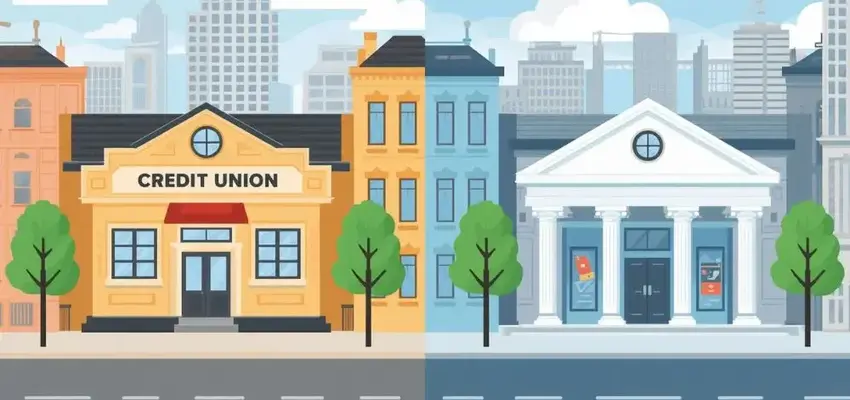
Deciding where to put your money is more than just finding a secure spot to store it. Nowadays, you have a wide range of choices, but two of the most popular are credit unions and banks. While they may provide similar accounts and the same level of federal deposit insurance, their structure and mission set them apart. Here are five ways credit unions and banks differ and why it matters.
Credit unions and banks insure deposits equally, but credit unions often emphasize security as part of their member-first approach, combining fraud protection with education and local support.
Both insure deposits up to $250,000 per depositor, through the NCUA for credit unions and the FDIC for banks. From a coverage standpoint, your money is equally protected. Like banks, many credit unions provide fraud monitoring, alerts, and tools to help members protect their accounts. As not-for-profits, credit unions emphasize personalized support and education, and many participate in fraud intelligence sharing across institutions.
Big banks emphasize branches and technology, but credit unions deliver both digital access and a nationwide ATM and shared branch network.
Credit unions have expanded well beyond local service. Through the CO-OP Network, members get access to more than 30,000 surcharge-free ATMs — more than many of the largest banks — plus over 5,000 shared branches nationwide for deposits, withdrawals, and loan payments. Many of those ATMs are located in everyday spots where people shop. No matter where you are, credit unions keep banking within reach. With surcharge-free ATMs, mobile apps, remote deposit, and online bill pay, it’s easy to manage your money while still enjoying the personal service credit unions are known for.
Banks are for-profit organizations that aim to boost revenue and shareholder value. Credit unions are not-for-profit cooperatives that return value to members, and that difference defines both structure and mission.
Credit unions reinvest earnings into their members by offering better rates, customized products, and services guided by democratically elected leaders. Each member is an equal owner with one vote. Members elect the volunteer Board of Directors and Supervisory Committee, who make decisions and provide oversight for the benefit of members.
Unlike banks, credit unions are tax-exempt and operate to cover their costs, not maximize profits. They earn enough to sustain their services and keep investing in tools and services members expect. Federal law also limits certain fees and caps maximum loan rates, which helps members save more over time.
That mission is often summed up in a simple phrase used across the industry: “People helping people.” It is more than a tagline. It is a movement that guides how credit unions operate, putting members and communities ahead of profits.
Banks prioritize shareholder value, while credit unions focus on keeping financial services rooted in the communities they serve.
That shows up in ways members can see and feel. When banks consolidate or close branches, credit unions often step in to preserve local access and keep staff in place. Though only 10% of credit unions have more than $1 billion in assets, they operate over half of the 900 branches located in areas that would otherwise be banking deserts. Many also serve specific groups like military families, rural towns, or schools — making sure people who might be overlooked still have access to affordable financial services.
For members, community impact means your deposits don’t just earn interest. They help keep branches open, fund loans for neighbors, and strengthen the local economy where you live and work.
Big banks follow standardized policies that put shareholders first. Credit unions are member-owned cooperatives that can adapt directly to members’ needs.
That flexibility is proven in tough times. After the 2008 financial crisis, credit union lending rose 15% more than banks. During the 2020–2021 downturn, credit unions grew loans at nearly double the rate of banks. When banks pulled back, credit unions kept lending.
Today, it's more important than ever. Rising prices and rates push members toward credit unions offering credit-building loans, counseling, and affordable borrowing. Surveys show 89% of members feel their financial well-being has improved, and they are more likely than non-members to say they have easy access to credit. For you, it means your credit union is more likely to find a way forward when life doesn’t fit a one-size-fits-all policy.
Both banks and credit unions provide similar core services and the same level of federal deposit insurance. The difference comes down to structure, purpose, and outcomes. If you want your money to stay local, support your goals, and connect you with an institution designed to serve members, a credit union could be the right fit.
Ready to join the movement? It’s easy to get started and begin experiencing the difference.
Internet Explorer is no longer supported by Microsoft. Please update to Microsoft's latest browser Microsoft Edge. Please note that even Microsoft's website cannot well-support this browser. Navigating to the link in this message will result in you being directed to a "Download Microsoft Edge" page with license terms and an "Accept and download" button.
You are leaving the Frontwave Credit Union website. External third-party web sites will be presented in a new and separate content window. Frontwave Credit Union does not provide, and is not responsible for, the product, service, overall website content, accessibility, security or privacy policies on any external third-party sites.